Introduction
Content creation has become an important part of the digital economy, providing individuals, businesses, educators, entertainers, and independent publishers with opportunities to reach audiences and generate income through online platforms. However, earning money from digital content requires more than uploading videos, attracting subscribers, or accumulating views. Creators must understand platform monetisation policies, eligibility requirements, copyright rules, advertising standards, and the responsibilities associated with earning revenue online.
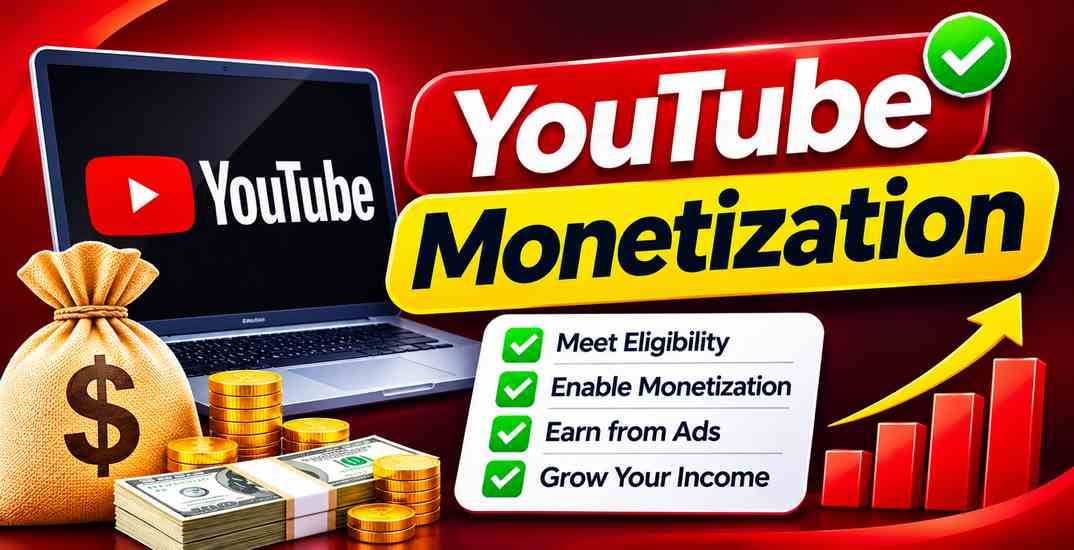
YouTube is one of the most widely used platforms for video publishing and creator monetisation. Through the YouTube Partner Program (YPP), eligible creators can access different monetisation features, including advertising revenue sharing, channel memberships, and other audience-supported services, depending on their location and eligibility.
Nevertheless, monetisation is not automatic. A channel may attract substantial attention without qualifying for particular revenue features, while an approved channel may experience changes in earnings due to audience behaviour, advertising demand, content suitability, and platform policies.
This guide explains how YouTube creator monetisation works, what creators should understand before applying, how to develop sustainable revenue strategies, and how to avoid common mistakes. It is particularly relevant to aspiring and established creators in Nigeria and other countries who want to approach online content creation professionally and responsibly.
1. Understand the Difference Between Audience Growth and Monetisation Eligibility
Building an audience and qualifying for monetisation are two different objectives. Although they are related, achieving one does not automatically establish the other.
Audience growth involves attracting viewers, encouraging subscriptions, increasing engagement, and developing a recognisable content identity. Monetisation eligibility, on the other hand, depends on meeting the requirements established by the platform for specific earning features.
For YouTube creators, the YouTube Partner Program provides access to monetisation opportunities for channels that satisfy the applicable eligibility conditions.
Depending on the programme tier, features, and country, requirements may involve:
A minimum number of subscribers.
Qualifying public watch hours within a specified period.
Eligible public Shorts views within a specified period.
Compliance with YouTube's channel monetisation policies.
Availability of the relevant programme in the creator's country or region.
A properly configured and eligible AdSense for YouTube account where required.
Compliance with applicable account security requirements.
It is important to understand that YouTube has different eligibility levels for certain monetisation features. Access to selected fan-funding or shopping features does not necessarily mean that a channel qualifies for advertising revenue sharing.
Similarly, reaching a published subscriber or viewing threshold does not guarantee acceptance into the programme. YouTube reviews channels against its applicable policies and other requirements.
Creators should therefore treat audience development and monetisation preparation as related but separate activities.
2. Understand YouTube Partner Program Requirements and Application Procedures
The YouTube Partner Program is YouTube's official framework for allowing eligible creators to access designated monetisation features.
However, requirements can change, and eligibility may differ depending on the feature a creator wants to access.
YouTube has historically provided two broad eligibility levels in supported countries:
Expanded YouTube Partner Program entry
In eligible regions, creators may qualify for selected monetisation features at a lower entry threshold. These features can include certain fan-funding and shopping options, subject to additional requirements and availability.
Full advertising revenue-sharing eligibility
A higher eligibility threshold generally applies to creators seeking access to advertising revenue sharing and associated programme benefits.
The published standard thresholds have included:
1,000 subscribers and 4,000 valid public watch hours within the previous 12 months; or
1,000 subscribers and 10 million valid public Shorts views within the previous 90 days.
For eligible regions offering expanded YPP access, the lower entry level has included:
500 subscribers.
At least three valid public uploads within the previous 90 days.
Either 3,000 valid public watch hours within the previous 12 months or 3 million valid public Shorts views within the previous 90 days.
These figures are included as general reference points, not a guarantee of current eligibility. The applicable thresholds, feature availability, and additional conditions should always be confirmed on YouTube's official programme pages before an application is prepared.
Important considerations before applying
Creators should review the following:
Channel location: Confirm that the programme and intended monetisation feature are available in the country associated with the channel.
Channel policy compliance: Ensure that published videos, channel descriptions, thumbnails, and other relevant materials comply with YouTube's applicable policies.
Account security: Meet the platform's account security requirements, including applicable two-step verification requirements.
AdSense for YouTube: Follow the official instructions for creating or linking the required payment account. Avoid duplicate accounts or unofficial account-registration services.
Channel review: Understand that YouTube may examine the channel as a whole, including its main theme, most-viewed content, newest uploads, metadata, and other relevant elements.
Creators can monitor their eligibility and application progress through the Earn section of YouTube Studio.
3. Understand the Different Ways YouTube Creators Can Earn Money
YouTube monetisation is not limited to advertisements. Eligible creators may have access to several revenue-generating features, depending on their location, channel status, content type, and programme eligibility.
Advertising revenue
Advertising revenue is generated when eligible advertisements are displayed around or within qualifying content under YouTube's monetisation arrangements.
Earnings may depend on several factors, including:
The geographical location of viewers.
Advertiser demand and competition.
The subject and commercial suitability of the content.
The type and placement of advertisements.
Viewer behaviour and advertising engagement.
Applicable revenue-sharing arrangements.
Seasonal changes in advertising expenditure.
Not every view generates advertising revenue. Some viewers may not receive advertisements, and certain videos may have limited or no advertising eligibility.
Consequently, creators should avoid relying on a fixed payment estimate for every 1,000 views. Advertising performance varies considerably between channels, audiences, content categories, and periods.
YouTube Shorts revenue sharing
Eligible creators may earn revenue through the YouTube Shorts monetisation system, subject to the applicable programme requirements and revenue-sharing arrangements.
Shorts monetisation operates differently from conventional long-form video advertising. Creators should understand the relevant Shorts revenue allocation and eligibility rules rather than assuming that earnings are calculated in exactly the same way as standard video advertisements.
Channel memberships
Channel memberships allow eligible creators to offer recurring paid membership benefits to viewers.
Depending on available features, benefits may include members-only content, badges, exclusive posts, community interactions, and other permitted experiences.
Creators should ensure that membership benefits are clearly described and consistently delivered.
Super Chat, Super Stickers and Super Thanks
Eligible channels may offer audience-supported features that allow viewers to financially support creators.
These include:
Super Chat: Allows eligible viewers to purchase highlighted messages during supported live streams and premieres.
Super Stickers: Allows eligible viewers to purchase animated stickers during supported live streams.
Super Thanks: Allows eligible viewers to support creators on qualifying videos through a paid appreciation feature.
Availability and eligibility differ by country, feature, and channel.
YouTube Shopping and product-related opportunities
Some eligible creators can use YouTube Shopping features to showcase products or participate in supported shopping arrangements.
Where available, these features may help creators connect audiences with relevant products and commercial offerings.
Creators should provide accurate product information and clearly disclose relevant commercial relationships.
4. Develop Sustainable Revenue Beyond Advertising
Although advertising can become an important source of income, depending entirely on platform-generated revenue may expose creators to financial uncertainty.
Advertising demand, platform policies, audience behaviour, and content suitability can change. Developing additional legitimate revenue sources may therefore help creators build a more sustainable business.
Possible opportunities include:
Sponsored content and brand partnerships: Businesses may pay creators to introduce or review products and services relevant to their audiences. Sponsored relationships should be clearly disclosed in accordance with applicable advertising laws and platform requirements.
Affiliate marketing: Creators may earn commissions when viewers purchase products or services through qualifying referral links. Affiliate relationships and material connections should be disclosed transparently.
Digital products: Creators with relevant expertise may develop and sell educational materials, downloadable resources, templates, guides, or other original digital products.
Online courses and training: Educational creators may develop structured learning programmes, workshops, or professional training services.
Consulting and professional services: Creators with relevant qualifications or experience may offer services such as coaching, design, marketing, technical support, or other professional assistance.
Merchandise: Creators may develop branded products that reflect their content identity and audience interests.
Each revenue stream has different costs, operational requirements, and legal or tax considerations. Creators should evaluate whether a particular opportunity is appropriate for their audience, capabilities, and business objectives.
A diversified revenue strategy should prioritise genuine audience needs rather than introducing products or services simply to generate additional income.
5. Respect Copyright, Originality and YouTube Monetisation Policies
Copyright compliance and content originality are essential considerations for creators seeking long-term monetisation.
Having permission to use a particular piece of material does not necessarily mean that a video automatically satisfies YouTube's monetisation policies.
Two important policy areas should be understood separately:
Copyright compliance
Creators must respect the rights of copyright owners when using music, video clips, photographs, graphics, recordings, and other protected materials.
Use original content, appropriately licensed resources, or material covered by a valid legal exception where applicable.
Do not assume that the following actions automatically provide copyright permission:
Giving credit to the original creator.
Changing the speed or pitch of a copyrighted song.
Using only a short extract.
Adding a disclaimer that the material belongs to someone else.
Describing a video as educational or non-commercial.
A copyright claim, removal request, or other rights-related issue can affect a creator's channel and the availability of particular content.
YouTube reused and inauthentic content policies
YouTube also evaluates whether content provides sufficient original value for monetisation.
Channels that primarily reproduce existing material without meaningful original contribution may face monetisation restrictions, even where the creator has permission to use the underlying content.
Similarly, mass-produced or repetitive material that lacks meaningful variation or audience value may not satisfy YouTube's monetisation requirements.
Creators should focus on producing content that demonstrates genuine originality, meaningful commentary, educational value, analysis, creativity, or other substantive contributions.
For example, a channel that uses publicly available news footage with little original explanation may face different monetisation considerations from a channel that provides substantial independent reporting, analysis, context, and commentary.
However, originality alone does not guarantee monetisation approval. All applicable platform policies must still be satisfied.
6. Build a Valuable Audience and Protect Your Channel
Sustainable creator development depends on audience trust, consistent value, and responsible account management.
Instead of focusing exclusively on subscriber numbers, creators should establish a clear identity and develop content that meets the expectations of their intended audience.
The following practices can help:
Choose a clear content direction: Identify the main subjects your channel will cover. A recognisable focus helps viewers understand what to expect.
Understand your audience: Research the questions, challenges, interests, and information needs of the people you want to reach.
Maintain a realistic publishing schedule: Establish a consistent schedule that can be sustained without compromising content quality.
Improve content presentation: Use accurate titles, relevant thumbnails, clear audio, appropriate editing, and organised video structures.
Use analytics responsibly: Review available performance indicators such as watch time, audience retention, returning viewers, and traffic sources to understand what is working.
Build audience relationships: Respond appropriately to comments, address reasonable feedback, and encourage constructive discussions.
Protect account access: Use strong, unique passwords, two-step verification, and secure account recovery methods. Be cautious of suspicious links and unsolicited offers.
Avoid artificial engagement: Do not purchase fake subscribers, views, watch time, or engagement. Artificial activity can undermine channel credibility and violate platform policies.
A sustainable channel should be built around repeat usefulness and audience confidence, not exaggerated income promises or shortcuts.
7. Understand Payments, Taxes and Financial Responsibilities
Creators who earn money through online platforms should understand the financial responsibilities associated with receiving and managing digital income.
The payment process may involve identity verification, payment-profile information, tax documentation, payment thresholds, and supported payment methods.
Creators should use official account-management channels and ensure that their information is accurate.
Important considerations include:
Payment eligibility: Confirm that the account satisfies the applicable payment requirements and that the selected payment method is supported.
Identity verification: Complete verification requests through official platform channels rather than sharing sensitive documents with unofficial agents.
Payment thresholds: Understand the minimum payment threshold and other conditions applicable to the relevant payment account and currency.
Tax obligations: Determine whether income earned through online platforms must be declared or taxed under the laws applicable to your country of residence or business establishment.
Currency and exchange rates: International creators may receive earnings in a supported payment currency. Conversion rates, bank charges, and applicable transaction fees may affect the amount ultimately received.
For creators in Nigeria, it is important to consider applicable Nigerian tax requirements, banking arrangements, foreign-currency payment procedures, and any relevant regulatory obligations.
Keep records of earnings, expenses, invoices, sponsorship agreements, and other relevant financial transactions.
For complex tax, banking, or business questions, consult appropriately qualified professionals in the relevant jurisdiction.
8. Practical Exercise: Evaluating a Creator Monetisation Decision
A practical way to understand creator monetisation is to evaluate a realistic business decision before investing time or money.
Consider a scenario in which an aspiring creator wants to start a YouTube channel focused on educational videos and eventually generate income from the content.
Prepare a one-page assessment covering the following areas.
A. Define the audience and content purpose
Identify the intended audience, the subject area, and the type of information or entertainment the channel will provide.
B. Verify monetisation requirements
Consult YouTube's official documentation to identify the current eligibility conditions, available monetisation features, and programme restrictions applicable to the creator's country.
C. Compare two content strategies
Evaluate at least two reasonable approaches, such as producing original long-form educational videos or developing a combination of original long-form videos and Shorts.
D. Assess costs and potential revenue sources
Consider equipment, internet access, production expenses, editing tools, research costs, advertising revenue, sponsorship opportunities, and other legitimate income sources.
E. Identify risks and limitations
Evaluate copyright exposure, account security, audience-building challenges, changing platform policies, privacy concerns, and the uncertainty of future earnings.
F. Develop an action plan
Prepare a realistic publishing and development plan that prioritises original content, audience value, policy compliance, and measurable progress.
This exercise is illustrative and does not describe an actual applicant, employer, grant, investment, or customer. Its purpose is to help creators make informed decisions before committing significant time or financial resources to a monetisation strategy.
9. Common Creator Monetisation Mistakes to Avoid
Many creators experience monetisation difficulties because they rely on incomplete information or focus on short-term growth without understanding platform requirements.
The following mistakes should be avoided:
Relying on unofficial monetisation information: Verify programme requirements directly through YouTube's official documentation.
Confusing subscribers with monetisation approval: Reaching a subscriber target does not automatically guarantee acceptance into the YouTube Partner Program.
Assuming every view generates income: Advertising revenue depends on several factors, and not every video view produces a monetised impression.
Ignoring country-specific eligibility: Monetisation features and programme availability may differ between countries.
Reusing content without meaningful original value: Reproducing existing material may create copyright and monetisation problems.
Buying subscribers and watch time: Artificial engagement can violate platform policies and undermine genuine audience development.
Ignoring sponsorship disclosures: Paid partnerships and affiliate relationships should be disclosed appropriately.
Sharing sensitive account information: Never give passwords, verification codes, or payment credentials to unofficial monetisation agents.
Believing guaranteed-income promises: No legitimate programme can guarantee a particular level of creator earnings.
Failing to maintain financial records: Keep appropriate records of payments, business expenses, and applicable tax obligations.
Avoiding these mistakes helps creators approach monetisation with more realistic expectations and stronger operational discipline.
Frequently Asked Questions (FAQs)
What is creator monetisation?
Creator monetisation refers to the different ways individuals and organisations generate income from original digital content, audiences, and related online activities. These opportunities may include advertising revenue, sponsorships, memberships, affiliate marketing, digital products, and professional services.
What is the YouTube Partner Program?
The YouTube Partner Program is YouTube's official programme through which eligible creators can access supported monetisation features. Depending on eligibility, country, and feature availability, these may include advertising revenue sharing, channel memberships, Super Chat, Super Stickers, Super Thanks, and shopping features.
How many subscribers do I need to monetise a YouTube channel?
The subscriber requirement depends on the monetisation tier and features available in the creator's country. YouTube has published a standard advertising revenue-sharing threshold of 1,000 subscribers alongside qualifying watch-time or Shorts-view requirements. An expanded programme in eligible regions has offered certain features at a lower entry threshold of 500 subscribers, subject to additional conditions.
These requirements can change. Always check YouTube's current official eligibility documentation before applying.
Does reaching 1,000 subscribers guarantee monetisation?
No. Subscriber numbers are only one part of the eligibility assessment. Creators must also satisfy the applicable viewing requirements, channel policy conditions, account requirements, and programme review process. Meeting the numerical thresholds does not guarantee approval.
Can I monetise YouTube Shorts?
Yes, eligible creators may earn through YouTube Shorts revenue sharing when they satisfy the relevant YouTube Partner Program requirements and Shorts monetisation policies. Shorts earnings operate under a different revenue-sharing arrangement from conventional long-form video advertising.
Can I earn money from YouTube without advertisements?
Yes. Depending on eligibility and location, creators may generate income through memberships, audience-supported features, sponsorships, affiliate marketing, merchandise, courses, and other legitimate services or products. These opportunities have their own requirements and may not all be provided directly through YouTube.
Why can a monetised channel earn less than another channel with similar views?
Earnings can vary because of audience location, advertiser demand, content category, advertising suitability, viewing patterns, video format, seasonality, and other factors. Consequently, two channels with similar view counts may receive significantly different advertising revenue.
Can I monetise videos containing copyrighted music?
Using copyrighted music without appropriate permission or another valid legal basis can result in copyright claims, restrictions, removal requests, or other consequences. Some music is available through authorised licensing arrangements, including resources provided by YouTube. Creators should verify the permitted usage conditions before incorporating music into monetised content.
Can I monetise AI-generated or faceless videos?
The use of AI tools or a faceless presentation format does not automatically prevent monetisation. However, the content must still satisfy YouTube's applicable originality, authenticity, and monetisation requirements. Repetitive, mass-produced, or minimally transformed material may face monetisation restrictions. Creators should provide meaningful original value and comply with applicable disclosure requirements.
How can creators in Nigeria receive YouTube earnings?
Eligible creators in Nigeria should follow the official AdSense for YouTube setup and payment instructions available to their accounts. Payment eligibility, supported payment methods, identity verification, and applicable banking requirements should be confirmed directly through official Google payment documentation. Creators should also understand their applicable Nigerian tax responsibilities.
How often should creators review YouTube monetisation policies?
Creators should review official policy documentation regularly, particularly before applying for monetisation, introducing new content formats, using third-party materials, or entering commercial partnerships. YouTube may update its requirements and enforcement practices over time.
Conclusion
Creator monetisation offers valuable opportunities for individuals and organisations seeking to build sustainable digital businesses. However, long-term success requires more than reaching subscriber targets or accumulating video views. It depends on understanding platform eligibility, producing original and valuable content, respecting copyright, maintaining audience trust, and managing revenue responsibly.
For aspiring and established creators, the most effective approach is to treat content creation as a long-term professional activity. Develop a clear audience strategy, verify official monetisation requirements, maintain consistent publishing standards, protect your account, and explore additional revenue opportunities where appropriate.
Most importantly, avoid relying on guaranteed-income claims, unofficial monetisation agents, or shortcuts that compromise channel integrity. Build a platform that offers genuine value to viewers and remains sustainable even as advertising markets and platform policies change.
Sources and Further Reading
1. YouTube Help – YouTube Partner Program Overview and Eligibility
Official information covering YouTube Partner Program eligibility, application procedures, and monetisation requirements.
https://support.google.com/youtube/answer/72851
2. YouTube Help – YouTube Channel Monetisation Policies
Guidance on the policies creators must follow when monetising content, including originality, reused content, and other channel requirements.
https://support.google.com/youtube/answer/1311392
3. YouTube Help – Advertiser-Friendly Content Guidelines
Official guidance explaining the content standards that determine whether videos are suitable for advertising.
https://support.google.com/youtube/answer/6162278
4. YouTube Help – YouTube Shorts Monetisation Policies
Information about the monetisation arrangements and requirements applicable to eligible Shorts content.
https://support.google.com/youtube/answer/12504220
Editorial note: YouTube monetisation requirements, programme availability, payment arrangements, and platform policies may change. The official YouTube Help Centre and YouTube Studio should be consulted for current account-specific information before making financial or business decisions.